Understanding multidimensional synonyms can completely change how you use language. Instead of repeating the same words, you can choose alternatives that better match tone, context, and emotion.
This is especially useful for students, ESL learners, writers, and content creators who want their communication to feel more natural and expressive.
In simple terms, multidimensional synonyms are words that may seem similar but carry slightly different meanings, tones, or usage situations. Learning them helps you avoid awkward sentences and sound more fluent.
In this article, we’ll explore one such word “demure” and look at 30 carefully explained synonyms you can use in different contexts.
What Does “Demure” Mean?
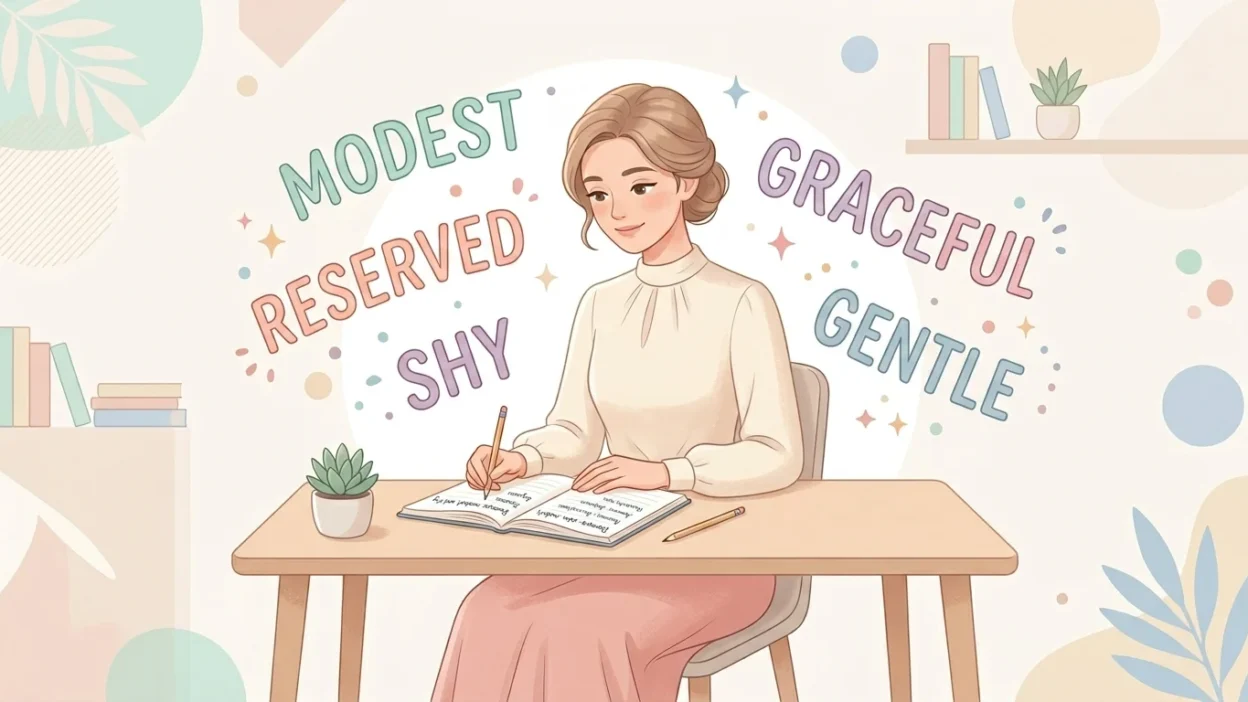
The word demure describes someone who is quiet, modest, shy, or reserved, especially in behavior or appearance. It often has a soft, polite, and sometimes slightly formal tone.
Simple meaning:
Calm, shy, and not showing too much emotion or attention
Example:
She gave a demure smile during the meeting.
Tone & Usage:
- Positive: polite, graceful, elegant
- Neutral: quiet and reserved
- Sometimes slightly old fashioned or formal
30 Synonyms of “Demure” (Simple Meanings + Examples)
1. Modest
Meaning: Not showing off; simple and humble
Example: She wore a modest dress to the event.
Context: Clothing, behavior, personality
2. Reserved
Meaning: Quiet and not very expressive
Example: He is reserved in public conversations.
Context: Personality
3. Shy
Meaning: Nervous around people
Example: The shy girl avoided eye contact.
Context: Social situations
4. Bashful
Meaning: Easily embarrassed, especially in attention
Example: He gave a bashful smile.
Context: Romantic or social
5. Quiet
Meaning: Not talking much
Example: She remained quiet during the discussion.
Context: General
6. Meek
Meaning: Gentle and not aggressive
Example: He spoke in a meek voice.
Context: Personality
7. Humble
Meaning: Not proud or arrogant
Example: She stayed humble despite success.
Context: Character
8. Subdued
Meaning: Calm and not strong in emotion
Example: His reaction was subdued.
Context: Emotional tone
9. Soft spoken
Meaning: Speaking in a gentle voice
Example: The teacher is soft spoken.
Context: Communication
10. Coy
Meaning: Pretending to be shy in a playful way
Example: She gave a coy smile.
Context: Flirty tone
11. Timid
Meaning: Lacking confidence
Example: The timid child hid behind her mother.
Context: Fear or insecurity
12. Introverted
Meaning: Prefers being alone
Example: He is introverted and enjoys reading.
Context: Personality type
13. Polite
Meaning: Showing good manners
Example: She gave a polite reply.
Context: Social behavior
14. Proper
Meaning: Correct and respectful behavior
Example: He behaved in a proper manner.
Context: Formal situations
15. Ladylike
Meaning: Graceful and well mannered
Example: She carried herself in a ladylike way.
Context: Traditional tone
16. Decent
Meaning: Respectful and appropriate
Example: He wore decent clothes.
Context: Behavior/dress
17. Mild
Meaning: Gentle and not strong
Example: She has a mild personality.
Context: General
18. Gentle
Meaning: Kind and soft
Example: He is gentle with children.
Context: Behavior
19. Composed
Meaning: Calm and in control
Example: She stayed composed during stress.
Context: Emotional control
20. Well mannered
Meaning: Behaving politely
Example: The boy is well mannered.
Context: Social situations
21. Graceful
Meaning: Elegant and smooth
Example: She walked gracefully.
Context: Appearance/movement
22. Prim
Meaning: Very proper and easily offended
Example: She has a prim attitude.
Context: Slightly negative/formal
23. Reticent
Meaning: Not sharing thoughts easily
Example: He is reticent about his feelings.
Context: Formal
24. Discreet
Meaning: Careful not to attract attention
Example: She made a discreet comment.
Context: Privacy
25. Self effacing
Meaning: Not trying to attract attention
Example: He is self effacing in meetings.
Context: Personality
26. Unassuming
Meaning: Simple and not proud
Example: She is unassuming despite fame.
Context: Character
27. Restrained
Meaning: Controlled emotions
Example: His response was restrained.
Context: Behavior
28. Calm
Meaning: Peaceful and not excited
Example: She remained calm under pressure.
Context: General
29. Innocent
Meaning: Pure and without bad intentions
Example: The child looked innocent.
Context: Emotional/character
30. Low key
Meaning: Not showing much attention or excitement
Example: They had a low key celebration.
Context: Informal tone
Comparison Guide: When to Use Which Synonym
| Situation | Best Synonyms |
| Formal writing | Reserved, Reticent, Composed |
| Casual conversation | Shy, Quiet, Calm |
| Positive personality | Gentle, Graceful, Modest |
| Slightly negative tone | Timid, Meek, Prim |
| Romantic/flirty | Coy, Bashful |
| Professional tone | Discreet, Restrained, Polite |
How to Choose the Right Synonym (By Tone & Intent)
Choosing the right word depends on what you want to express.
1. For Positive & Elegant Tone
Use: Graceful, Modest, Gentle, Ladylike
👉 Best for compliments or formal writing
2. For Neutral Description
Use: Quiet, Reserved, Calm, Soft spoken
👉 Best for general descriptions
3. For Shyness or Weak Confidence
Use: Timid, Meek, Bashful
👉 Use carefully (can sound negative)
4. For Formal & Academic Writing
Use: Reticent, Composed, Restrained, Discreet
👉 Adds professionalism
5. For Playful or Romantic Context
Use: Coy, Bashful
👉 Adds emotion and charm
Why Multidimensional Synonyms Matter
Using multidimensional synonyms helps you:
- Avoid repeating the same word
- Express subtle differences in meaning
- Sound more natural and fluent
For example, instead of always using “shy,” you can choose “reserved,” “bashful,” or “timid” depending on the situation.
Final Thoughts
Learning multidimensional synonyms like those for demure gives you more control over your language. You don’t just say something you say it in the right way.
The key takeaway:
- “Demure” generally means quiet, modest, and reserved
- Not all synonyms are equal they vary by tone, context, and intention
- Choosing the right synonym improves both writing and communication
Start practicing by replacing simple words with more precise alternatives. Over time, your vocabulary will feel richer, more natural, and far more effective.