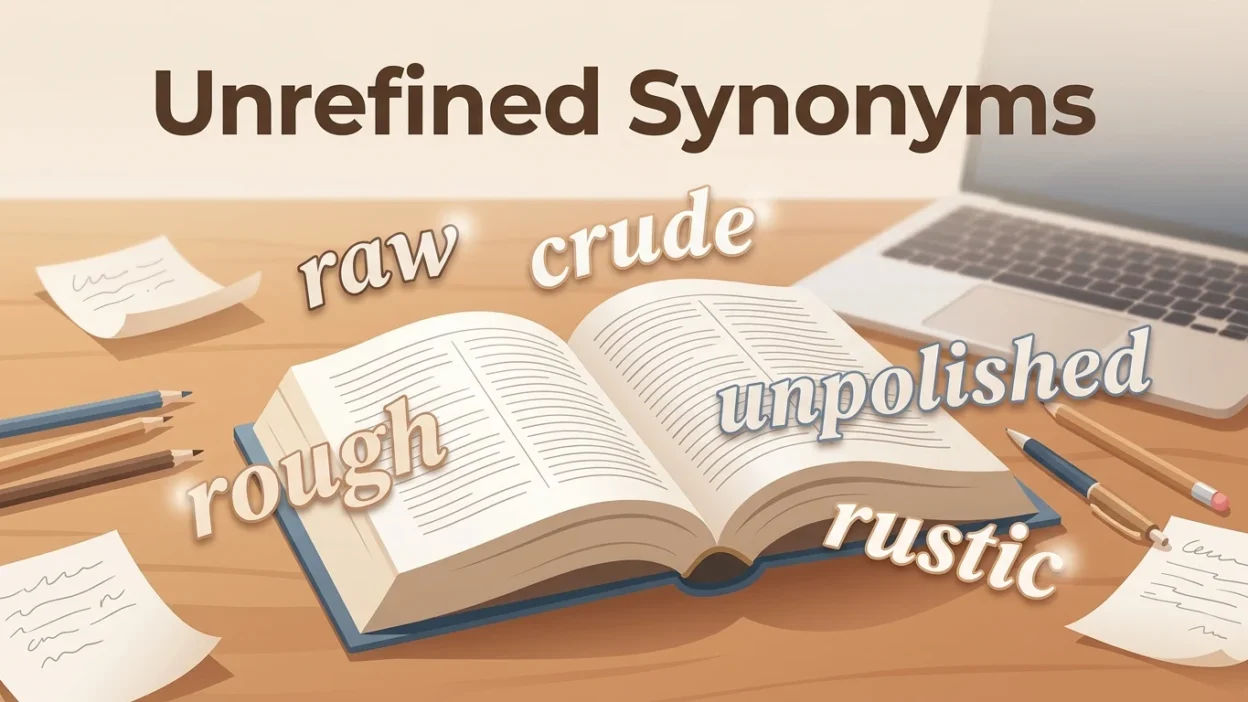
The word “unrefined” is commonly used in English to describe something rough, undeveloped, impolite, or not processed into a polished form. Depending on the situation, it can describe a person’s behavior, writing style, appearance, language, food products, or even artistic work.
Learning unrefined synonyms helps students, writers, ESL learners, and content creators express ideas more accurately. Instead of repeating the same word again and again, you can choose a synonym that better matches the tone and meaning you want to communicate.
For example, “unpolished” may sound softer and more professional, while “crude” may sound stronger or more negative. Understanding these small differences improves both writing and speaking skills.
What Does “Unrefined” Mean?
The word unrefined generally means:
- Not polished or improved
- Rough or simple in style
- Lacking sophistication or manners
- Not purified or processed
Simple Meaning
Something that is unrefined is still in its natural, rough, or undeveloped state.
Tone and Usage Context
The word can be used in both positive and negative ways depending on the context.
- Negative tone: rude behavior, poor manners, rough language
- Neutral tone: raw materials, natural products
- Positive tone: authentic, natural, original creativity
Example Sentence
His writing style was unrefined but full of honest emotion.
30 Unrefined Synonyms with Meanings and Examples
1. Rough
Meaning: Not smooth, polished, or finished.
Example Sentence: The sculpture still looked rough after the first stage.
Best Usage Context: Early drafts, unfinished work, texture descriptions.
2. Crude
Meaning: Very simple, raw, or lacking skill.
Example Sentence: The drawing was crude but creative.
Best Usage Context: Art, language, behavior, raw oil.
3. Raw
Meaning: Natural and not processed or developed.
Example Sentence: She showed raw talent in music.
Best Usage Context: Talent, emotions, food, natural materials.
4. Unpolished
Meaning: Not fully improved or refined.
Example Sentence: His speech sounded unpolished yet sincere.
Best Usage Context: Writing, speaking, creative work.
5. Coarse
Meaning: Rough in texture or manners.
Example Sentence: He used coarse language during the argument.
Best Usage Context: Behavior, fabric, speech.
6. Rudimentary
Meaning: Very basic or undeveloped.
Example Sentence: The village used rudimentary tools for farming.
Best Usage Context: Technology, history, lifestyle.
7. Rustic
Meaning: Simple and country like in style.
Example Sentence: They decorated the cabin with rustic furniture.
Best Usage Context: Interior design, countryside themes.
8. Natural
Meaning: Existing without artificial processing.
Example Sentence: The soap contains natural ingredients.
Best Usage Context: Food, beauty products, lifestyle.
9. Untreated
Meaning: Not processed or improved.
Example Sentence: The wood remained untreated for years.
Best Usage Context: Materials, chemicals, health.
10. Unprocessed
Meaning: Not changed from its original form.
Example Sentence: Many people prefer unprocessed foods.
Best Usage Context: Food, materials, manufacturing.
11. Uncultured
Meaning: Lacking education or sophistication.
Example Sentence: His uncultured remarks offended the guests.
Best Usage Context: Social behavior, formal settings.
12. Unsophisticated
Meaning: Simple and lacking refinement.
Example Sentence: The design was unsophisticated but functional.
Best Usage Context: Technology, style, communication.
13. Rugged
Meaning: Rough but strong or natural looking.
Example Sentence: The area is famous for its rugged mountains.
Best Usage Context: Nature, appearance, outdoor themes.
14. Earthy
Meaning: Natural, simple, and grounded.
Example Sentence: She has an earthy sense of style.
Best Usage Context: Personality, fashion, art.
15. Blunt
Meaning: Direct and sometimes lacking politeness.
Example Sentence: His blunt comments surprised everyone.
Best Usage Context: Communication, opinions.
16. Uncivilized
Meaning: Lacking social development or manners.
Example Sentence: The behavior seemed uncivilized to the audience.
Best Usage Context: Strong criticism, historical writing.
17. Plain
Meaning: Simple and without decoration.
Example Sentence: She wore a plain white dress.
Best Usage Context: Clothing, design, writing.
18. Simple
Meaning: Basic and uncomplicated.
Example Sentence: The room had a simple design.
Best Usage Context: General everyday use.
19. Naive
Meaning: Innocent and lacking experience.
Example Sentence: His naive ideas needed more planning.
Best Usage Context: Personality, thinking style.
20. Unfinished
Meaning: Not completed or perfected.
Example Sentence: The painting remained unfinished.
Best Usage Context: Projects, art, writing.
21. Harsh
Meaning: Rough or unpleasant in effect.
Example Sentence: The harsh criticism upset her.
Best Usage Context: Tone, weather, conditions.
22. Gritty
Meaning: Rough and realistic.
Example Sentence: The movie showed a gritty view of city life.
Best Usage Context: Films, storytelling, realism.
23. Rough hewn
Meaning: Shaped in a rough or unfinished way.
Example Sentence: The cabin had rough hewn wooden walls.
Best Usage Context: Furniture, architecture, art.
24. Homespun
Meaning: Simple and traditional.
Example Sentence: He shared homespun wisdom with the class.
Best Usage Context: Advice, rural themes.
25. Uneducated
Meaning: Lacking formal education.
Example Sentence: The character appeared uneducated but intelligent.
Best Usage Context: Social discussion, education topics.
26. Boorish
Meaning: Rude and insensitive.
Example Sentence: His boorish behavior embarrassed his friends.
Best Usage Context: Personality and manners.
27. Barbaric
Meaning: Extremely rough or cruel.
Example Sentence: The punishment seemed barbaric.
Best Usage Context: Serious criticism, history.
28. Inexperienced
Meaning: Lacking knowledge or skill from practice.
Example Sentence: The inexperienced worker needed guidance.
Best Usage Context: Jobs, learning, training.
29. Artless
Meaning: Simple, natural, and without artificial style.
Example Sentence: Her artless honesty impressed everyone.
Best Usage Context: Literature, personality descriptions.
30. Uncultivated
Meaning: Not developed, improved, or educated.
Example Sentence: The land remained uncultivated for decades.
Best Usage Context: Agriculture, personality, skills.
Comparison Guide: When to Use Different Unrefined Synonyms
| Synonym | Best For | Tone |
| Rough | Texture or unfinished work | Neutral |
| Crude | Skill or behavior | Negative |
| Raw | Natural ability or emotion | Neutral/Positive |
| Unpolished | Writing or speaking | Mild |
| Coarse | Manners or language | Negative |
| Rustic | Country style | Positive |
| Rudimentary | Early development stages | Neutral |
| Gritty | Realistic storytelling | Positive/Neutral |
| Boorish | Rude personality | Strong Negative |
| Natural | Organic products | Positive |
How to Choose the Right Synonym
Use Softer Synonyms for Professional Writing
Choose these when you want a polite or balanced tone:
- Unpolished
- Simple
- Natural
- Rustic
- Raw
These words sound less critical and more respectful.
Use Stronger Synonyms for Criticism
Choose these when describing rude behavior or poor quality:
- Crude
- Boorish
- Barbaric
- Coarse
- Uncivilized
These words carry a stronger negative meaning.
Use Creative Synonyms for Art and Storytelling
Best choices for creative writing include:
- Gritty
- Earthy
- Rough hewn
- Artless
- Rustic
These words create vivid imagery and emotional depth.
Use Neutral Synonyms for Everyday English
These are easy and commonly understood:
- Plain
- Simple
- Rough
- Unfinished
- Inexperienced
Perfect for students and ESL learners.
Why Learning Unrefined Synonyms Matters
Expanding your vocabulary improves:
- Writing quality
- Communication skills
- Creative expression
- SEO content writing
- Academic performance
Using varied vocabulary also makes your writing sound more natural and professional.
For example, instead of repeating “unrefined” many times, you can switch to words like “raw,” “coarse,” or “unpolished” depending on the situation.
Common Mistakes When Using Unrefined Synonyms
Confusing “Raw” with “Crude”
- Raw can be positive when describing talent.
- Crude usually sounds more negative.
Example:
- She has raw musical talent. ✅
- She has crude musical talent. ❌
Using Strong Words in Formal Settings
Words like “barbaric” or “boorish” can sound very harsh.
Use softer alternatives like:
- Unsophisticated
- Unpolished
- Inexperienced
in professional communication.
Conclusion
Understanding unrefined synonyms helps you become a better writer and speaker. Each synonym has a slightly different tone, meaning, and usage context. Some words describe natural simplicity, while others express criticism or lack of sophistication.
By learning these alternatives, students, ESL learners, writers, and content creators can choose words more accurately and communicate ideas more effectively.
The next time you want to replace the word unrefined, consider the exact tone and context you need. Whether you choose “raw,” “rustic,” “crude,” or “unpolished,” the right synonym can make your writing clearer, richer, and more engaging.