
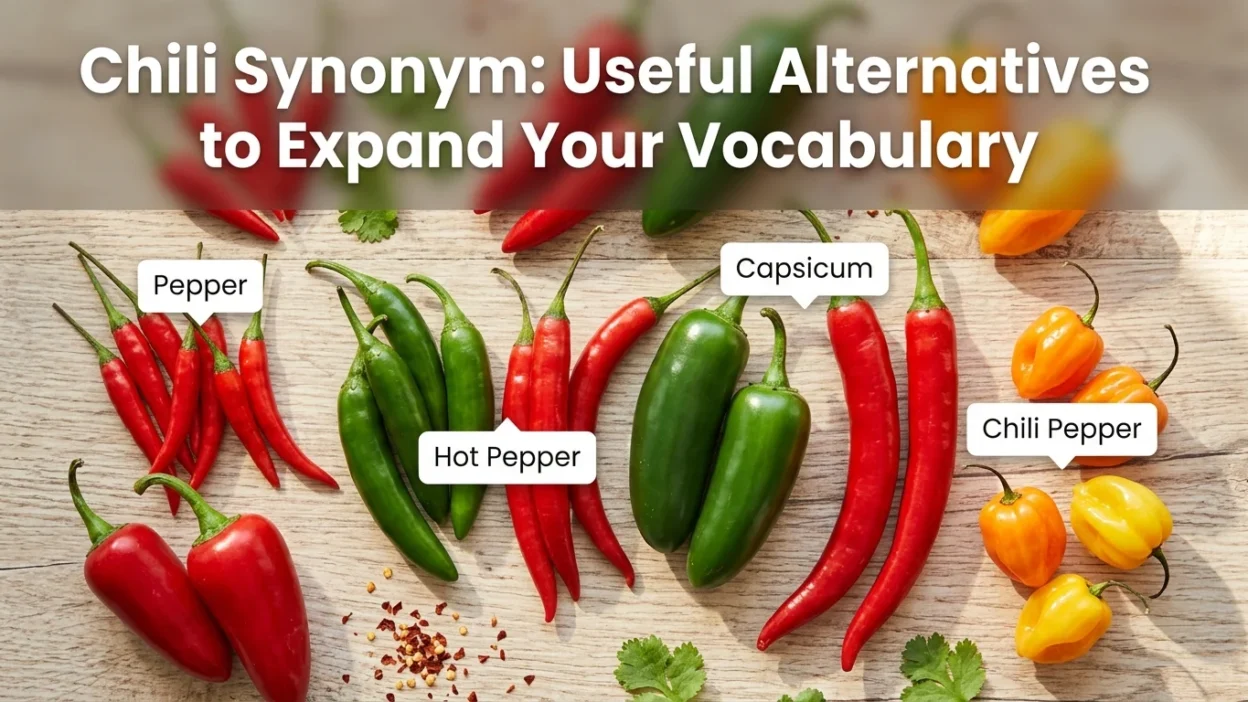
The word chili is commonly used to describe a spicy pepper, a spicy flavor, or dishes made with hot peppers. Whether you are writing recipes, creating food content, studying English, or simply looking to improve your vocabulary, knowing a good chili synonym can make your writing more interesting and precise.
Different synonyms for chili are used in different situations. Some refer to the pepper itself, while others describe its heat, flavor, or culinary use. Learning these alternatives helps students, ESL learners, writers, and content creators communicate more effectively.
In this guide, you’ll discover the meaning of chili, 30 useful synonyms, examples, usage contexts, and tips for choosing the right word.
What Does “Chili” Mean?
Chili is a type of hot pepper known for its spicy taste. The word can also refer to foods, sauces, or dishes made with these peppers.
Tone: Informal to neutral
Usage Context: Cooking, recipes, food discussions, gardening, and descriptive writing about spicy foods.
30 Synonyms of Chili
1. Pepper
Meaning: A general term for peppers, including hot and sweet varieties.
Example Sentence: She added fresh pepper to the vegetable dish.
Best Usage Context: General cooking discussions.
2. Chili Pepper
Meaning: A hot pepper used to add spice to food.
Example Sentence: The recipe calls for one chopped chili pepper.
Best Usage Context: Recipes and food articles.
3. Hot Pepper
Meaning: Any pepper with a spicy flavor.
Example Sentence: Hot pepper gives the sauce its fiery taste.
Best Usage Context: Informal food descriptions.
4. Capsicum
Meaning: The scientific name for peppers.
Example Sentence: Capsicum plants grow well in warm climates.
Best Usage Context: Gardening and scientific writing.
5. Red Pepper
Meaning: A red colored pepper, often spicy.
Example Sentence: Red pepper added both color and flavor.
Best Usage Context: Recipe descriptions.
6. Jalapeño
Meaning: A medium hot variety of chili pepper.
Example Sentence: Jalapeño slices topped the nachos.
Best Usage Context: Specific pepper varieties.
7. Serrano
Meaning: A small, spicy chili pepper.
Example Sentence: Serrano peppers are hotter than jalapeños.
Best Usage Context: Culinary discussions.
8. Cayenne
Meaning: A thin, hot red pepper often dried into powder.
Example Sentence: Cayenne gave the soup extra heat.
Best Usage Context: Spice and seasoning references.
9. Habanero
Meaning: A very hot chili pepper.
Example Sentence: Habanero peppers can be extremely spicy.
Best Usage Context: Discussions of intense heat.
10. Poblano
Meaning: A mild chili pepper commonly used in Mexican cuisine.
Example Sentence: Poblano peppers are great for stuffing.
Best Usage Context: Mexican recipes.
11. Anaheim Pepper
Meaning: A mild green chili pepper.
Example Sentence: Anaheim peppers have a gentle flavor.
Best Usage Context: Cooking and gardening.
12. Bird’s Eye Chili
Meaning: A small but very spicy pepper.
Example Sentence: Bird’s eye chili is common in Asian dishes.
Best Usage Context: Asian cuisine.
13. Scotch Bonnet
Meaning: A hot pepper similar to habanero.
Example Sentence: Scotch bonnet peppers are popular in Caribbean cooking.
Best Usage Context: Caribbean recipes.
14. Ghost Pepper
Meaning: One of the world’s hottest peppers.
Example Sentence: Ghost pepper sauce is not for beginners.
Best Usage Context: Extreme spice discussions.
15. Pepper Pod
Meaning: The fruit of a pepper plant.
Example Sentence: The pepper pod turned bright red when ripe.
Best Usage Context: Gardening content.
16. Spice Pepper
Meaning: A pepper valued mainly for heat.
Example Sentence: Spice peppers are commonly dried and ground.
Best Usage Context: Food descriptions.
17. Hot Capsicum
Meaning: A scientific style term for spicy peppers.
Example Sentence: Hot capsicum varieties differ greatly in heat.
Best Usage Context: Educational writing.
18. Fire Pepper
Meaning: A descriptive term for very hot peppers.
Example Sentence: Fire peppers can make dishes intensely spicy.
Best Usage Context: Informal descriptions.
19. Fiery Pepper
Meaning: A pepper with strong heat.
Example Sentence: The fiery pepper transformed the flavor.
Best Usage Context: Creative writing.
20. Spice Pod
Meaning: A pepper used mainly for seasoning.
Example Sentence: The spice pod was dried before use.
Best Usage Context: Food and spice discussions.
21. Heat Pepper
Meaning: A pepper known for adding heat.
Example Sentence: Heat peppers are common in spicy sauces.
Best Usage Context: Casual food writing.
22. Red Chili
Meaning: A ripe red hot pepper.
Example Sentence: Red chili powder flavored the curry.
Best Usage Context: Cooking and recipes.
23. Green Chili
Meaning: An unripe green hot pepper.
Example Sentence: Green chili added freshness to the dish.
Best Usage Context: Everyday cooking.
24. Spice Vegetable
Meaning: A vegetable used primarily for flavor and heat.
Example Sentence: This spice vegetable enhances many dishes.
Best Usage Context: General food writing.
25. Chili Pod
Meaning: The fruit of a chili plant.
Example Sentence: The chili pod was harvested early.
Best Usage Context: Agriculture and gardening.
26. Seasoning Pepper
Meaning: A pepper used for flavoring foods.
Example Sentence: Seasoning peppers improve the taste of soups.
Best Usage Context: Culinary writing.
27. Piquant Pepper
Meaning: A pepper with a pleasantly sharp taste.
Example Sentence: The piquant pepper balanced the rich sauce.
Best Usage Context: Formal food reviews.
28. Zesty Pepper
Meaning: A pepper providing lively flavor.
Example Sentence: The zesty pepper made the salad more exciting.
Best Usage Context: Food blogs.
29. Spicy Pepper
Meaning: A pepper that produces heat and spice.
Example Sentence: Spicy peppers are essential in many cuisines.
Best Usage Context: General descriptions.
30. Heat Pod
Meaning: A descriptive term for a hot pepper fruit.
Example Sentence: The heat pod was added carefully to the stew.
Best Usage Context: Informal and creative writing.
Comparison : When to Use Different Chili Synonyms
| Synonym | Best For | Formality |
| Pepper | General use | Neutral |
| Chili Pepper | Recipes | Neutral |
| Hot Pepper | Everyday conversation | Informal |
| Capsicum | Scientific writing | Formal |
| Jalapeño | Specific food references | Neutral |
| Cayenne | Spice discussions | Neutral |
| Habanero | Very spicy foods | Neutral |
| Ghost Pepper | Extreme heat descriptions | Neutral |
| Red Chili | Cooking and recipes | Neutral |
| Green Chili | Everyday food writing | Neutral |
| Piquant Pepper | Food reviews | Formal |
| Fiery Pepper | Creative descriptions | Informal |
How to Choose the Right Synonym
For Everyday Conversation
Use:
- Pepper
- Hot Pepper
- Spicy Pepper
- Red Chili
- Green Chili
These words are easy to understand and commonly used.
For Recipes and Cooking Content
Use:
- Chili Pepper
- Jalapeño
- Cayenne
- Poblano
- Serrano
- Habanero
These terms provide more specific information about flavor and heat.
For Scientific or Educational Writing
Use:
- Capsicum
- Hot Capsicum
- Pepper Pod
- Chili Pod
These sound more technical and precise.
For Creative and Descriptive Writing
Use:
- Fiery Pepper
- Fire Pepper
- Piquant Pepper
- Zesty Pepper
- Heat Pod
These create vivid imagery and add style to your writing.
Conclusion
Understanding a useful chili synonym can improve your vocabulary and make your writing more engaging. While words like pepper, hot pepper, and chili pepper work well in everyday situations, more specific terms such as jalapeño, cayenne, habanero, and ghost pepper offer greater accuracy.
The best synonym depends on your purpose. For recipes, use the exact pepper variety. For educational content, choose scientific terms like capsicum. For creative writing, descriptive alternatives such as fiery pepper and piquant pepper can make your content more vivid and memorable.
By learning these 30 chili synonyms, you’ll be better equipped to write clearly, accurately, and confidently in any context.